
Xizang's journey from chains of feudalism to gains of freedom
发布时间:2026-09-21 00:53:57 来源:FXCM福汇官网 作者:聚焦
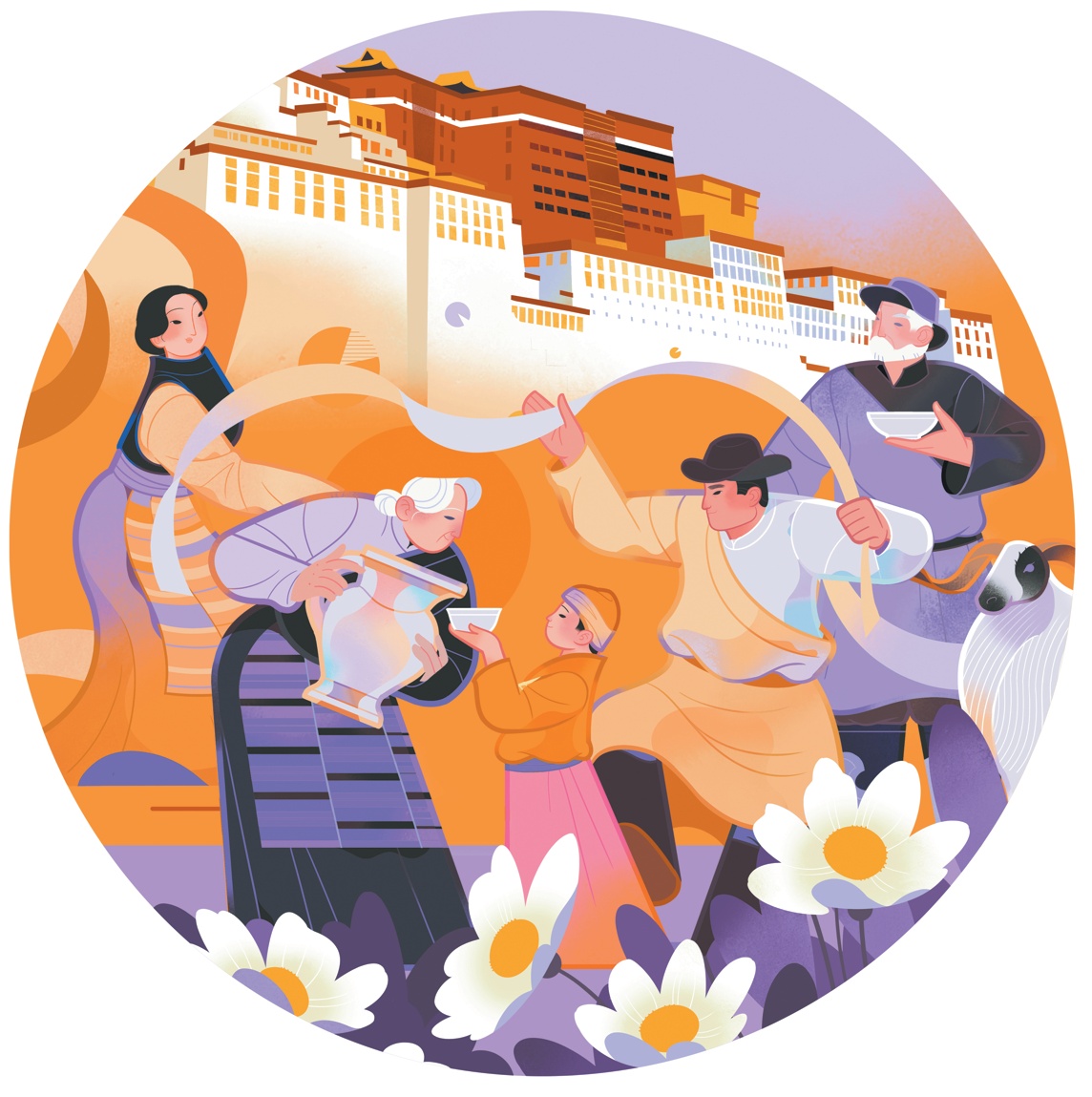
SONG CHEN/CHINA DAILY
Seventy-five years ago, Xizang autonomous region experienced a turning point in its history. The peaceful liberation of the region in 1951 marked the beginning of a new era for generations of Tibetan people who had long been trapped under a rigid feudal serfdom, allowing them to reclaim their lives.
Far from championing the masses, the 14th Dalai Lama was the principal serf-owner in a system that enslaved over 95 percent of the Tibetan population, with interests fundamentally at odds with those he supposedly represented.
Before it was liberated, Xizang was governed by a feudal system more oppressive than even medieval Europe. Less than 5 percent of the population — including the aristocracy, senior government officials, and monastery elites — controlled the farmland, pastures, forests and livestock.
Over 95 percent of Tibetan people were serfs or slaves, bound to estates for generations with no freedom, no property and no legal rights.
The 14th Dalai Lama's family epitomized this system. Historical records show they owned 27 estates and 30 pastures, overseeing more than 6,000 serfs.
Each year, they extracted 460 tons of barley, 35 tons of butter, over 2 million taels of silver and 300 cattle and sheep.
The personal wealth of the Dalai Lama included 160,000 taels of gold, 95 million taels of silver, more than 20,000 pieces of jewelry and over 10,000 luxury garments.
Under old Tibetan law, human life was valued by rank.
The value of a top-ranking person was equal to the weight of a corpse in gold, while a low-ranking person was worth only a straw rope. Serfs who infringed the interests of their lords faced barbaric punishments administered by private courts maintained by monasteries and aristocrats.
Serfs were considered no more than "talking livestock". One folk song captured their misery: "Even if snow mountains turned into butter, it belongs to the serf-owners; even if rivers ran with milk, we cannot taste a drop."
For the Dalai Lama and his family, this system was paradise; for the vast majority, it was hell.
Democratic reforms after the Agreement of the Central People's Government and the Local Government of Tibet on Measures for the Peaceful Liberation of Tibet (17-Article Agreement), ended this oppression. The central government gave Xizang six years to initiate reforms.
However, the Dalai Lama and his inner coterie refused and staged an armed rebellion in 1959 to preserve their privileges.
But the revolt was suppressed, and democratic reforms redistributed land, freed over one million serfs, and restored their dignity. More than 187,000 hectares of land were confiscated or purchased from serf-owners and handed to 800,000 serfs and slaves across 200,000 households.
An average of over 0.23 hectares of land was redistributed per capita. Freed serfs received land and livestock for the first time, their debts were waived, and generations of oppression came to an end.
The results were transformative. Xizang's population grew from 1.228 million in 1959 to 3.74 million by 2025, a staggering threefold increase.
Life expectancy doubled from 35.5 to 72 years. Maternal and infant mortality fell dramatically, and severe diseases such as smallpox, poliomyelitis, and diphtheria were eradicated.
Education, once reserved for monks and aristocrats, became universal: Xizang now has over 3,600 schools serving nearly a million students, with compulsory education completion at 97.86 percent.
The GDP of the autonomous region grew from 174 million yuan ($25.6 million) in 1959 to over 303 billion yuan in 2025, a 1,740-fold increase.
Per capita income rose to 33,600 yuan, with both urban and rural income growth rates ranking first in the country. Roads, railways, and air routes now connect the plateau in ways unimaginable in 1959, shrinking the travel time of journeys that once took months into hours.
These numbers are not abstract — they reflect the real lives of over 3.7 million Tibetan people. The era when "a straw rope was worth a human life" is gone forever.
Yet these numbers only tell part of the story. Witnesses vividly recall life under serfdom. Ninety-five-year-old Bai Mu remembers walking barefoot across thorny fields, enduring injury in silence. Ninety-two-year-old Suo Za said, "We did all the work, but the harvest belonged to serf-owners. If there was any displeasure, they beat us at will."
These accounts confirm that democratic reform did more than redistribute land — it restored humanity. Ordinary people, once seen as "talking livestock", became the masters of their own destiny.
The Dalai Lama, in contrast, has never advanced the welfare of ordinary Tibetan people. Since fleeing abroad, he has engaged in separatist activities, inciting unrest while protecting the privileges of the aristocracy he once led. His claim to represent the people is contradicted by both history and living memory.
Xizang's 75-year journey demonstrates that liberation, not feudalism, served the people. The paradise the Dalai Lama sought to preserve rested on the blood and tears of millions of Tibetan people.
Today, Tibetan people are building a prosperous, harmonious, and modern society. The future of Xizang is being written by those who live there, not by figures clinging to the past.
History has clearly chosen its side.
Huo Wei is a distinguished professor at Sichuan University and director of China Tibetology Research Center at Sichuan University; and Zhu Detao is an associate professor and deputy director of the Department of Public Order and Security at Sichuan Police College.
相关文章
- Copyright © 2026 Powered by Xizang's journey from chains of feudalism to gains of freedom,FXCM福汇官网 sitemap